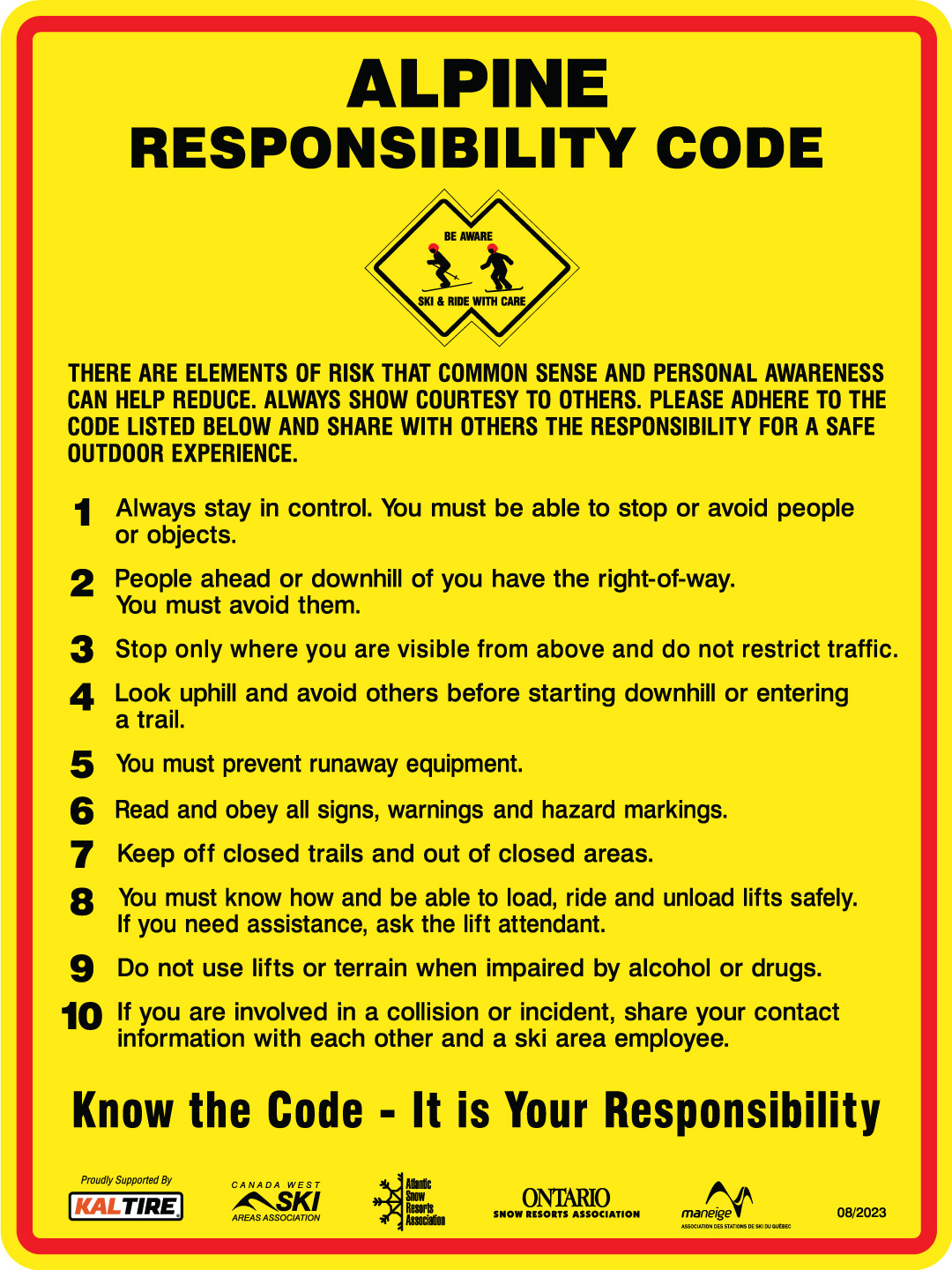
In addition to the Alpine Responsibility Code, here are some additional tips to keep you safe and enjoy your day on the slopes.
Weather
- Plan ahead for variations in weather. Dress appropriately, wearing layers. Warmth and visibility are key safety components. Even in the summer, full-length clothing and proper closed-toe footwear provides important protection.
- Always wear sunscreen, and goggles or sunglasses, even on cloudy days. Even in the winter, UV rays are reflected from the snow surface.
- Cold temperatures increase the likelihood of frostbite. Dress warm and keep an eye on exposed skin. Go inside immediately if skin begins to turn white.
- In summer, be aware of heat exhaustion. Proper hydration and wearing moisture-wicking clothing will help keep heat exhaustion at bay.
- Take note of the conditions and be aware of changing surface conditions. When the snow surface is hard and fast, it is easy to ski/ride at high speed, increasing the risk for serious injury if you fall and slide.
Ski with a buddy
- Identify meeting points with your group in case you become separated. All group members should know where to meet should separation occur.
- Carry a whistle and be particularly cautious when skiing/riding in the trees. Tree wells are a real risk. See more on Tree Well Safety.
- Helmets – it is highly recommended to wear a helmet while skiing and riding. Skiers and snowboarders are encouraged to educate themselves on the benefits and limitations of helmet usage. See more on snow sports helmets.
- Don’t overdo it. Be aware of fatigue, many visitors are on vacation and might not be conditioned to ski/board long days. Warm-up in the morning and stretch it out, then tone it down in the afternoon.
- Snowcats and snowmobiles may be encountered during operating hours. Give these vehicles plenty of space.
Be aware of your surroundings
- Be mindful of where you stop on the hill, for your safety and the safety of others. When resting, move over to the side of the run. Never stop under a roller, jump, cat track, or on a blind corner, as other skiers, and boarders may not be able to see you.
- Always be aware of other skiers and riders on the trails. Look uphill before you commence downhill, and yield to other skiers and riders.
Communicate your plan
- Make a trip plan. Be sure someone knows where you have gone and when you expect to return.
- Identify meeting points with your group in case you become separated. All group members should know where to meet should separation occur.
- Carry a whistle and be particularly cautious when skiing/riding in the trees. Tree wells are a real risk. Read more about tree wells below.
- Carry a cell phone. However, be aware that not all areas will have reception.
Be aware of wildlife
The mountains are the home of many animals free roaming in their natural habitat. While visiting a ski area you may encounter animals such as bears or cougars. Know what type of wildlife you are likely to encounter while recreating and take the necessary steps to avoid an encounter. Do not approach wildlife to take photos. Travel in groups – there is safety in numbers. Wear bells, talk or sing to alert animals to your presence.
We’re here to Help
Send us a message, email, or call us.
"*" indicates required fields